


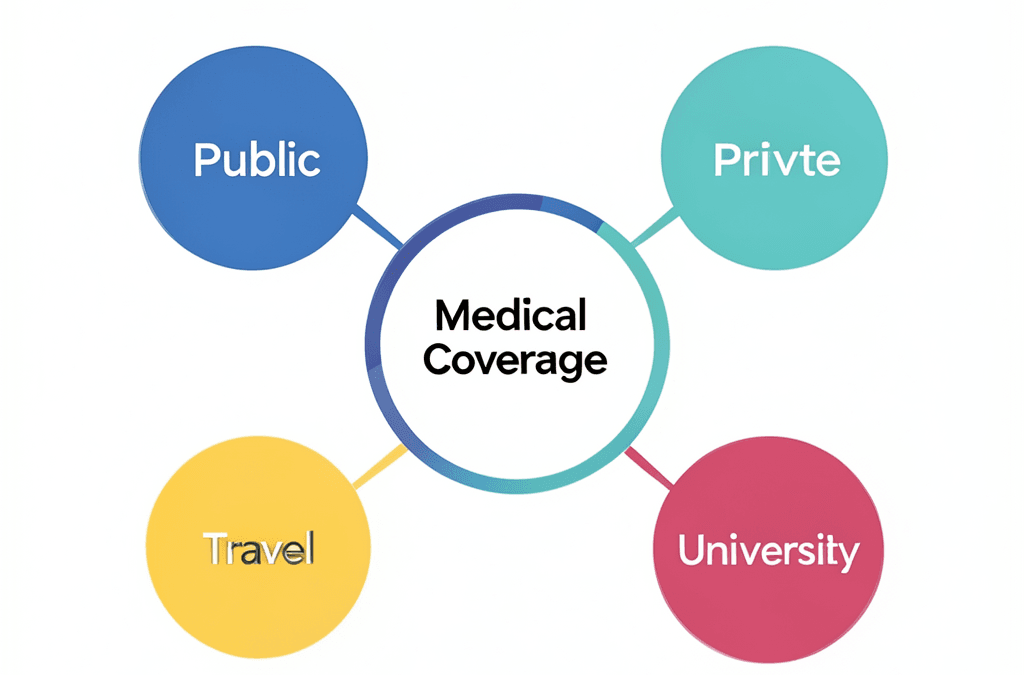
Moving to a new country for academic purposes is an exhilarating journey, but it comes with significant logistical challenges. One of the most critical aspects of this transition is securing a reliable health plan, as medical costs abroad can be prohibitively expensive. Understanding the four types of medical coverage every international student should know is the first step toward ensuring you are not left vulnerable during an emergency.
Navigating foreign healthcare systems often feels like learning a new language. From deductibles and co-pays to waiting periods and network restrictions, the terminology can be overwhelming for newcomers. Failing to choose the right plan can lead to denied claims or massive out-of-pocket expenses that derail your educational goals.
In this comprehensive guide, we will break down the different insurance structures available to you. By comparing public and private options, travel-specific policies, and university-mandated plans, you will be able to make an informed decision. For those moving to Europe, knowing how to choose a medical insurance for studying abroad is essential for meeting visa requirements and ensuring peace of mind.
1. Public Health Insurance Systems
Public health insurance is typically managed by the government and funded through taxes or mandatory contributions. In many countries, international students may be eligible for these systems if they are from a treaty-partner nation or if they pay a specific social security fee. These plans often provide a wide range of primary care services at little to no cost at the point of use.
However, public systems are not without their drawbacks. The most common complaint is the long waiting time for specialist appointments and non-urgent surgeries. Because these services are heavily subsidized, the demand often exceeds the capacity of the system, leading to bureaucratic delays that can be frustrating for students on a strict academic schedule.
It is also important to check if your specific nationality grants you access to these benefits. Some students find that they need specific documentation to prove their residency status before they can enroll. Public coverage is often the most affordable option, but it may lack the flexibility of choosing your own doctor or accessing high-end private clinics.
- Cost-Effective: Low or no premiums for eligible students.
- Comprehensive: Usually covers emergency and basic primary care.
- Accessibility: Access to a vast network of government-funded clinics.
- Slow Pacing: Longer wait times for elective procedures.
- Bureaucracy: Requires extensive registration and residency proof.
2. Private Medical Insurance Plans
Private medical insurance is a contract between an individual and a commercial insurance company. These plans are designed to provide faster access to healthcare and a higher level of comfort. When discussing the four types of medical coverage every international student should know, private insurance is often the most recommended for those who prioritize efficiency and quality of care.
One of the primary advantages of private insurance is the ability to bypass long government queues. You can often book appointments with specialists within days rather than months. Additionally, many private plans offer a wider array of optional extras, such as dental care, vision coverage, and mental health support, which are sometimes limited in public systems.
For students from specific regions, finding a plan without restrictive waiting periods is crucial. For instance, seeking a medical insurance without waiting periods for Ecuadorian students ensures that they have immediate protection from the day they arrive, avoiding the typical gap where pre-existing conditions aren’t covered.
Understanding Premiums and Deductibles
When choosing a private plan, you must understand the relationship between premiums and deductibles. A higher monthly premium usually results in a lower deductible, meaning the insurance company pays more of the bill from the start. Conversely, a low premium often comes with a high deductible, requiring you to pay a significant amount out-of-pocket before the coverage kicks in.
Network Restrictions
Private insurers operate with ‘networks’ of approved doctors and hospitals. Using a provider outside of this network can result in significantly higher costs or a total denial of the claim. Always verify that the clinics nearest to your university are within the insurer’s network to avoid unexpected charges.
Customization Options
Unlike public plans, private insurance allows for customization. You can add ‘riders’ or additional modules for things like maternity care, orthodontic treatment, or high-limit repatriation services if you fall seriously ill and need to be transported back to your home country.
| Feature | Public Insurance | Private Insurance |
|---|---|---|
| Wait Times | Long | Short/Immediate |
| Cost | Low/Tax-funded | Monthly Premium |
| Doctor Choice | Assigned/Limited | Flexible within Network |
| Coverage Speed | Standard | Expedited |
3. University-Sponsored Health Plans
Many universities, particularly in the United States and Canada, mandate that all international students have health insurance. To simplify this, universities often offer their own group plans. These are collective policies negotiated between the educational institution and an insurance provider, offering a bulk rate that is often cheaper than an individual private policy.
The primary benefit of these plans is the seamless integration with the campus health center. Since the university manages the policy, students can often walk into the campus clinic and receive treatment without worrying about the paperwork. The billing is handled internally, making it the most convenient option for those who are not familiar with the local medical system.
However, university plans are ‘one size fits all.’ They are designed to cover the average student, which means they might lack specific coverage for chronic conditions or high-end specialized care. University plans ensure you meet visa requirements without having to search for an external provider, but they may be more expensive than a tailored private plan.
- Enrollment: Usually happens during the university registration process.
- Payment: Premiums are often charged directly to the student’s tuition account.
- Verification: The university automatically verifies the coverage for visa offices.
- Integration: Direct billing with on-campus medical facilities.
- Renewal: Automatically renewed for the duration of the academic program.
4. Travel Medical Insurance Options
Travel medical insurance is a short-term solution designed for people visiting a country for a brief period. While it is not a substitute for a long-term health plan, it is one of the four types of medical coverage every international student should know, especially for those arriving a few weeks early to settle in or those taking short-term exchange programs.
These policies focus heavily on emergencies and accidents rather than routine check-ups or chronic disease management. They typically cover hospital stays resulting from unforeseen accidents and provide emergency medical evacuation. This is a critical feature, as moving a patient from a remote area to a major city hospital can cost tens of thousands of dollars.
The biggest risk with travel insurance is the lack of coverage for preventative care. You cannot use a travel policy for a yearly physical or a routine dental cleaning. If you are staying for a full semester or a degree program, relying solely on travel insurance is a dangerous gamble that could leave you without coverage for common illnesses like the flu or respiratory infections.
If you are unsure which plan to start with, you can browse a professional insurance store to compare different short-term and long-term options side-by-side. This allows you to see the exact differences in coverage limits and exclusions before committing your budget.
- Emergency Focus: Specialized in accidents and acute illnesses.
- Evacuation: High coverage for medical repatriation and transport.
- Short Duration: Ideal for 30 to 90-day stays.
- Low Cost: Very affordable for short-term durations.
- Limited Scope: Does not cover routine or preventative care.
Comparing the Four Types of Medical Coverage Every International Student Should Know
Choosing between these four options requires a careful analysis of your health history, budget, and the legal requirements of your host country. For example, a student with a chronic condition would find private insurance far more appealing due to the speed of specialist access, whereas a healthy student on a tight budget might prefer the public system if eligible.
It is also vital to consider the ‘overlap’ of coverage. Some students choose to maintain a high-deductible private plan while using university services for basic needs. This hybrid approach provides a safety net for catastrophic events while keeping daily healthcare costs manageable. Comparing the total cost of ownership—including premiums and potential out-of-pocket spends—is the only way to find the truly cheapest option.
Furthermore, always check the ‘exclusions’ list of any policy. Many plans do not cover pre-existing conditions for the first few months of the policy. Understanding these gaps is the difference between receiving a check for 10,000 euros and receiving a bill for 10,000 euros after a sudden hospitalization.
| Plan Type | Best For… | Main Weakness | Visa Acceptance |
|---|---|---|---|
| Public | Budget-conscious | Wait times | High |
| Private | Speed & Quality | Monthly cost | Very High |
| University | Convenience | Lack of tailoring | Guaranteed |
| Travel | Short-term arrival | No routine care | Low/Medium |
Essential Tips for Choosing Your Student Insurance
Once you understand the four types of medical coverage every international student should know, the next step is the selection process. Do not be swayed by the lowest price; instead, look at the ‘Maximum Sum Insured.’ A plan that costs 10 euros less per month but has a lower coverage limit can be a financial disaster if a serious accident occurs.
Check the repatriation clause carefully. If you are seriously injured, you may want to be treated in your home country. A good policy should cover not just the medical treatment, but also the specialized transport and the cost of a medical escort to fly with you. Without this, your family may have to bear an enormous financial burden.
Finally, keep digital and physical copies of your insurance card and policy documents at all times. In an emergency, you may not have access to your email or the internet. Having a physical card with the policy number and the 24/7 emergency contact phone number can save precious minutes during a medical crisis.
- Verify Visa Requirements: Ensure the plan meets the specific minimum coverage required by the embassy.
- Review Exclusion Lists: Know exactly what is NOT covered to avoid surprises.
- Check Network Locations: Confirm there are hospitals and clinics near your dormitory.
- Analyze Deductibles: Decide if you prefer a higher monthly cost or a higher cost per visit.
- Confirm 24/7 Support: Ensure the company has an English-speaking emergency line.
Common Mistakes International Students Make with Insurance
The most frequent error is assuming that travel insurance is sufficient for a full academic year. While travel insurance is great for a vacation, it is not designed for the lifestyle of a student. Routine visits to a GP for a persistent cough or a mental health consultation are typically not covered under travel policies, leaving the student to pay full price.
Another common mistake is failing to report pre-existing conditions. Some students believe that if they don’t mention a previous illness, the insurance will simply cover it. However, insurance companies have ways of verifying medical histories, and omitting a condition can lead to the entire policy being voided for fraud, leaving the student completely unprotected.
Lastly, many students ignore the ‘waiting period’ or ‘carecy’ phase. Some policies have a 30-day or 90-day window where certain treatments are not covered. Ignorance of waiting periods can lead to a situation where a student falls ill in their first month and finds that their insurance refuses to pay for the treatment.
The Danger of ‘Cheap’ Policies
Low-cost policies often hide their lack of value in the fine print. They may have extremely low coverage ceilings—for example, only covering up to 30,000 euros—which is insufficient for a major surgery or a long ICU stay. Always prioritize the ‘Total Coverage Limit’ over the ‘Monthly Premium.’
Overlooking Mental Health
The stress of studying abroad can take a toll on mental health. Many basic plans exclude psychological support or psychiatric care. Ensure your chosen plan includes mental health services, as access to a counselor can be vital for academic success and personal well-being.
Ignoring Repatriation Costs
Many students assume their home country’s insurance will cover them abroad. In reality, most domestic plans stop at the border. Without a specific international repatriation rider, the cost of flying a patient home on a medical jet can exceed 50,000 dollars, a cost that is almost never covered by standard health plans.
Conclusion: Securing Your Future Health and Academic Success
Securing the right health plan is as important as choosing the right university. By understanding the four types of medical coverage every international student should know—public, private, university-sponsored, and travel insurance—you can create a safety net that protects both your health and your finances. The right choice depends on your unique needs, your budget, and the legal mandates of your destination.
Remember that health is unpredictable. A small accident or a sudden illness should not be the reason you are forced to leave your studies or return home in debt. Take the time to read the fine print, compare the networks, and ensure there are no hidden waiting periods that leave you vulnerable during your first few weeks abroad.
Ultimately, investing in a comprehensive plan is an investment in your peace of mind. Now that you have a full understanding of the four types of medical coverage every international student should know, you are ready to browse the available options and pick the plan that offers the best balance of cost and protection for your academic journey.
